-
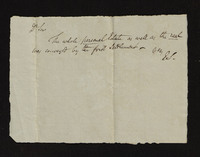 Margaret Oswald Smyth to John Penn, Edward Shippen, Thomas Parke (with reponses), 1786, n.d.
 Mentions Whitehall plantation.
-
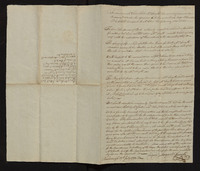 Letter from Margaret Oswald Smyth to George Campbell, July 29, 1793
 Includes reference to enslaved persons named Andover and Hampshire as well as reference to Margaret covering the costs of clothing and maintenance. Margaret was under increasing financial pressure after inheriting Joseph Turner's estate, which she could not afford to upkeep on her own.
African American people mentioned:
Andover & Hampshire
-
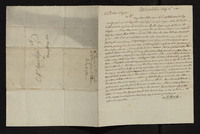 Letter from Joseph Turner to Robert Taylor, July 12th, 1783
 Includes reference to enslaved laborers in New Jersey
-
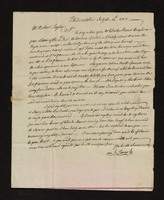 Letter from Joseph Turner to Robert Taylor, July 20th, 1784
 Includes reference to enslaved laborers in New Jersey.
African American people mentioned:
Burras or Bussras [spelling unclear]
-
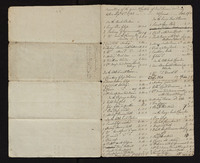 Inventories of the Goods, Chattels of Joseph Turner's estate, September 1, 1783
 Includes references to "Negro Man Caesar, 50 years old" and "Negroes Feather Beds."
African American people mentioned:
Caesar
-
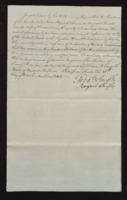 Benjamin Chew's accounts with Margaret Oswald Smyth, 1783-1800, n.d
 Several documents listing time owed, for women Hannah and Rachel, to Benjamin Chew from Frederick Smyth and his wife. One document implies the two will have to pay Hannah's wages to Benjamin Chew until she is 28, based on a balance of account from April 22, 1792.
-
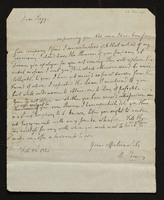 Letter from Benjamin Chew to Margaret Smyth February 2, 1786
 Letter mentions sending a person named Bob to Peggy Chew.
African American people mentioned:
Bob [race unclear]
-
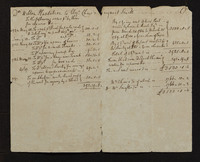 Accounts of Wilton Plantation, 1784-1789, undated
 Handwritten accounting notes regarding the Wilton plantation.
-
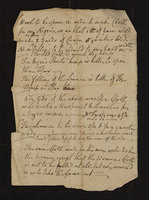 Spinning and weaving instructions, n.d.
 Handwritten instructions on weaving linen to clothe enslaved people.
African American people mentioned:
"Negroes" involved in spinning and weaving clothes for slaves
-
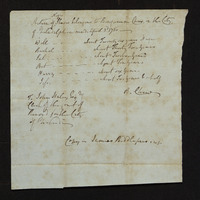 Returns/Entries of slaves - Office of Registering Negroes, 1780-1789
 Registration or declaration forms of Benjamin Chew's slaves. Includes names and ages of enslaved adults and children.
African American people mentioned:
Will, Rachel, Sal, Bet, Harry [unclear], Priscilla, Sarah, Sal, Judith, David, George, Enos, Dick
-
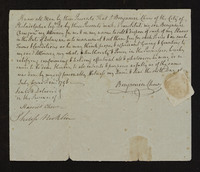 Power of Attorney to Benjamin Chew Jr. re: sale of Delaware slaves, 6 July, 1796
 Power of Attorney from Benjamin Chew, Sr. to Benjamin Chew Jr., allowing his son to sell his enslaved people in Delaware.
African American people mentioned:
Enslaved people of the Chew family
-
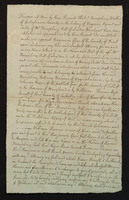 Power of Attorney Humphrey Wallis to Benjamin Chew re: slave Frank (Will); fees related, 1750
 Notes from Humphrey Wallis regarding an enslaved man named Frank (or Will) in a Dover jail, accused of burglary and theft. Frank was an escaped slave, who after being captured and jailed, escaped jail as well. Benjamin Chew is granted power of attorney from Wallis, a Virginia-based agent of a London merchant, to barter of sell Frank as he sees fit.
African American people mentioned:
Frank [alias Will]
-
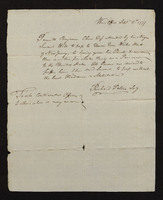 Parole document relating to Benjamin Chew's confinement in New Jersey, September 5th, 1777
 Notes enslaved man named Will brought with Benjamin Chew during his parole.
African American people mentioned:
Will
-
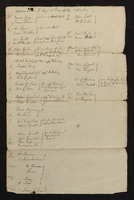 Appearance to Chester County Court, August term, 1764
 A court case between two men on the subject of a "case for deceit in selling negro wench."
African American people mentioned:
A "negro wench"
-
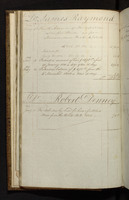 Entry regarding hire of a black man from the White Hall estate, from Benjamin Chew's ledger, January 21, 1810
 Details the hire of a black man from the White Hall estate for $74.67.
African American people mentioned:
A Black man
-
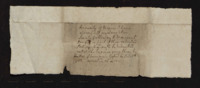 Wills - Notes of Benjamin Chew, 1781-1807, n.d.
 Includes lists of enslaved people's names, notes transfer of enslaved people to different Chew relatives.
-
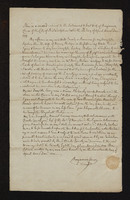 Wills - Codicils of Benjamin Chew, 1801-1809, n.d.
 To update Chew's will, regarding his daughters' marriages or being widowed
-
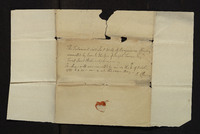 Wills of Benjamin Chew, 1770-1789
 Includes multiple versions of Benjamin Chew's will. Three give lists of slaves that are to be given to his wife upon his death. The document from 1777 also gives permission to his wife, son, and brothers to sell certain lands and properties, including his "stock of negros."
African American people mentioned:
Efses, Black Will, Little Will, Priscilla, Rachel, Rachel's children, Hannah, George, Jenny, Dinah
-
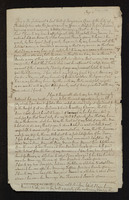 Wills of Benjamin Chew, 1799
 Includes lists names of enslaved people and who they would transfer to on Benjamin Chew's death.
-
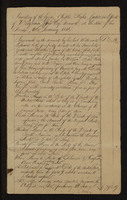 Inventories and first administration account of Benjamin Chew, 1810-1812
 Inventory of the Goods, Chattles, Rights, Credits and Effects of Benjamin Chew Esq., deceased, at the time of his Decease, January 20, 1810. Taken by Sam Bryan, Register.
-
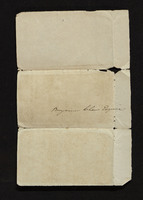 Appraisal of Benjamin Chew's Estate, 1777-1783
 Folder holds three documents, including estimate of Benjamin Chew's "real and personal estate" taken by his son, Benjamin Chew Jr., on January 3rd, 1778. Both "Negroes at Home" and "Negroes in [Kent]" are included.
African American people mentioned:
"Negroes in Kent" & "Negroes at Home"
-
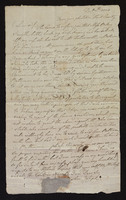 Letter from Joseph, an enslaved man, to Benjamin Chew, December 5th, 1804
 A very personal letter from Joseph, an enslaved man, concerning the sale of his wife (unnamed) to Mr. Holmsworth in Baltimore. Joseph requests of Benjamin Chew to be sent to work or sold out to Baltimore to be closer to his wife.
African American people mentioned:
Joseph & Joseph's wife
-
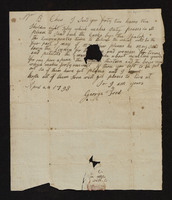 Letter from George Ford to Benjamin Chew, 1793
 Letter concerning ham, wheat, and linen order for men and women's clothing.
-
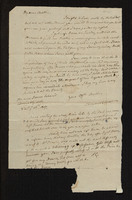 Letter from Samuel Chew to Benjamin Chew, November 16, 1807
 Letter from Samuel Chew discussing a person who has purchased property from "Ben" and expresses concern over the "disposal" of his "negroes stock", requiring immediate attention.
African American people mentioned:
Ben's "Negroes stock"
-
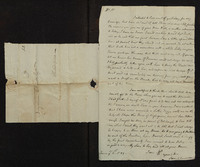 Letter from Samuel Chew to Benjamin Chew, June 10, 1789
 Letter from Samuel Chew mentioning two potentially enslaved men that possibly ran away.
African American people mentioned:
Will (potentially a runaway) & Dick (possibly enslaved, residing with Samuel Chew)