-
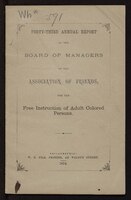 Forty-third annual report of the board of managers of the Association of Friends for the Free Instruction of Adult Colored Persons, 1874
 The Associations of Friends for the Free Instruction of Adult Colored Persons was a Quaker organization that formed in 1789 to provide education to black adults in Philadelphia. The minutes of the Association provide a record of its activities, events, finances, and membership subscriptions. The Association would continue to serve the black community of Philadelphia until 1906.
-
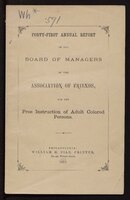 Forty-first annual report of the board of managers of the Association of Friends for the Free Instruction of Adult Colored Persons, 1872
 The Associations of Friends for the Free Instruction of Adult Colored Persons was a Quaker organization that formed in 1789 to provide education to black adults in Philadelphia. The minutes of the Association provide a record of its activities, events, finances, and membership subscriptions. The Association would continue to serve the black community of Philadelphia until 1906.
-
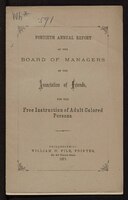 Fortieth annual report of the board of managers of the Association of Friends for the Free Instruction of Adult Colored Persons, 1871
 The Associations of Friends for the Free Instruction of Adult Colored Persons was a Quaker organization that formed in 1789 to provide education to black adults in Philadelphia. The minutes of the Association provide a record of its activities, events, finances, and membership subscriptions. The Association would continue to serve the black community of Philadelphia until 1906.
-
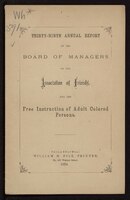 Thirty-ninth annual report of the board of managers of the Association of Friends for the Free Instruction of Adult Colored Persons, 1870
 The Associations of Friends for the Free Instruction of Adult Colored Persons was a Quaker organization that formed in 1789 to provide education to black adults in Philadelphia. The minutes of the Association provide a record of its activities, events, finances, and membership subscriptions. The Association would continue to serve the black community of Philadelphia until 1906.
-
 Thirty-eighth annual report of the board of managers of the Association of Friends for the Free Instruction of Adult Colored Persons, 1869
 The Associations of Friends for the Free Instruction of Adult Colored Persons was a Quaker organization that formed in 1789 to provide education to black adults in Philadelphia. The minutes of the Association provide a record of its activities, events, finances, and membership subscriptions. The Association would continue to serve the black community of Philadelphia until 1906.
-
 Thirty-seventh annual report of the board of managers of the Association of Friends for the Free Instruction of Adult Colored Persons, 1868
 The Associations of Friends for the Free Instruction of Adult Colored Persons was a Quaker organization that formed in 1789 to provide education to black adults in Philadelphia. The minutes of the Association provide a record of its activities, events, finances, and membership subscriptions. The Association would continue to serve the black community of Philadelphia until 1906.
-
 Thirty-sixth annual report of the board of managers of the Association of Friends for the Free Instruction of Adult Colored Persons, 1867
 The Associations of Friends for the Free Instruction of Adult Colored Persons was a Quaker organization that formed in 1789 to provide education to black adults in Philadelphia. The minutes of the Association provide a record of its activities, events, finances, and membership subscriptions. The Association would continue to serve the black community of Philadelphia until 1906.
-
 Thirty-fifth annual report of the board of managers of the Association of Friends for the Free Instruction of Adult Colored Persons, 1866
 The Associations of Friends for the Free Instruction of Adult Colored Persons was a Quaker organization that formed in 1789 to provide education to black adults in Philadelphia. The minutes of the Association provide a record of its activities, events, finances, and membership subscriptions. The Association would continue to serve the black community of Philadelphia until 1906.
-
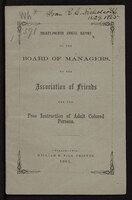 Thirty-fourth annual report of the board of managers of the Association of Friends for the Free Instruction of Adult Colored Persons, 1865
 The Associations of Friends for the Free Instruction of Adult Colored Persons was a Quaker organization that formed in 1789 to provide education to black adults in Philadelphia. The minutes of the Association provide a record of its activities, events, finances, and membership subscriptions. The Association would continue to serve the black community of Philadelphia until 1906.
-
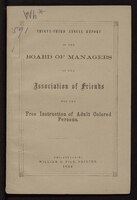 Thirty-third annual report of the board of managers of the Association of Friends for the Free Instruction of Adult Colored Persons, 1864
 The Associations of Friends for the Free Instruction of Adult Colored Persons was a Quaker organization that formed in 1789 to provide education to black adults in Philadelphia. The minutes of the Association provide a record of its activities, events, finances, and membership subscriptions. The Association would continue to serve the black community of Philadelphia until 1906.
-
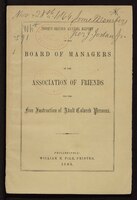 Thirty-second annual report of the board of managers of the Association of Friends for the Free Instruction of Adult Colored Persons, 1863
 The Associations of Friends for the Free Instruction of Adult Colored Persons was a Quaker organization that formed in 1789 to provide education to black adults in Philadelphia. The minutes of the Association provide a record of its activities, events, finances, and membership subscriptions. The Association would continue to serve the black community of Philadelphia until 1906.
-
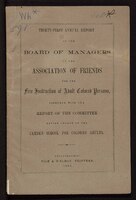 Thirty-first annual report of the board of managers of the Association of Friends for the Free Instruction of Adult Colored Persons, 1861
 The Associations of Friends for the Free Instruction of Adult Colored Persons was a Quaker organization that formed in 1789 to provide education to black adults in Philadelphia. The minutes of the Association provide a record of its activities, events, finances, and membership subscriptions. The Association would continue to serve the black community of Philadelphia until 1906.
-
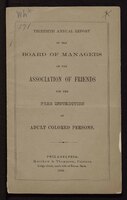 Thirtieth annual report of the board of managers of the Association of Friends for the Free Instruction of Adult Colored Persons, 1860
 The Associations of Friends for the Free Instruction of Adult Colored Persons was a Quaker organization that formed in 1789 to provide education to black adults in Philadelphia. The minutes of the Association provide a record of its activities, events, finances, and membership subscriptions. The Association would continue to serve the black community of Philadelphia until 1906.
-
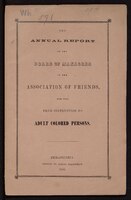 Twenty-ninth annual report of the board of managers of the Association of Friends for the Free Instruction of Adult Colored Persons, 1859
 The Associations of Friends for the Free Instruction of Adult Colored Persons was a Quaker organization that formed in 1789 to provide education to black adults in Philadelphia. The minutes of the Association provide a record of its activities, events, finances, and membership subscriptions. The Association would continue to serve the black community of Philadelphia until 1906.
-
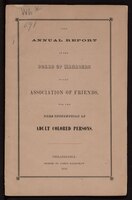 Twenty-eighth annual report of the board of managers of the Association of Friends for the Free Instruction of Adult Colored Persons, 1858
 The Associations of Friends for the Free Instruction of Adult Colored Persons was a Quaker organization that formed in 1789 to provide education to black adults in Philadelphia. The minutes of the Association provide a record of its activities, events, finances, and membership subscriptions. The Association would continue to serve the black community of Philadelphia until 1906.
-
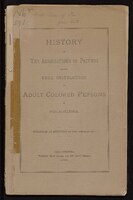 History of the Associations of Friends for the Free Instruction of Adult Colored Persons in Philadelphia, 1890
 The Associations of Friends for the Free Instruction of Adult Colored Persons was a Quaker organization that formed in 1789 to provide education to black adults in Philadelphia. The history of the organization provides a basic outline of its development, reporting changes in its structure, membership, and students. The history suggests that between 1822 and 1831 the Association was suspended, and resuming in 1832. It would continue to serve the black community of Philadelphia until 1906.
-
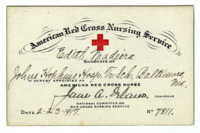 Edith Madeira scrapbook, 1918-1919
 In 1900, Edith Madeira obtained a nursing degree from John Hopkins Hospital Training School in Baltimore, Maryland. She served as a nurse superintendent for Howard Hospital in Philadelphia and Mountainside Hospital in Montclair, New Jersey. Madeira also served as a public health nurse and was superintendent of the Visiting Nurse Association in Harrisburg, Pennsylvania, and Waterbury, Connecticut. Committed to helping the needy, Madeira volunteered for the American Red Cross Commission to Palestine during World War I and served as chief nurse from June 1918 to January 1919. The Commission was formed "to look after the sickness and starvation of the civilian population in the occupied area of Palestine". Madeira's scrapbook encompasses her journey to Palestine, as well as her service in the Red Cross Commission to Palestine. The scrapbook contains photographs of nursing staff and military officers, movement and docking orders, dried flowers and leaves collected on the trip, a palm leaf with a written prayer, postcards, hotel pamphlets, tickets, newspaper clippings, and greeting cards.
-
 Emilie Davis diary, 1864
 The third of three diaries by Emilie Davis, a young African-American woman who lived in Philadelphia during the Civil War. The three diaries, 1863-1865, contain memories of her day-to-day life with mention of some wartime events, including the fall of Vicksburg and draft riots in New York City during 1863. Davis was likely in her late teens or early twenties when she began writing her diary in 1863. Although a great deal of information is recorded, typical diary entries are not very detailed. Daily entries provide a glimpse of the life of a young woman in Philadelphia, including her visits with family and friends and her experiences attending weddings, funerals, lectures, school, and church fairs. Most of the news Davis recorded in her diary focuses on the Civil War. National events, such as National Fast Day (April 1863), the 1863 New York draft riots, and the 1864 presidential election, are mentioned. In July 1863, she observed that people in the Harrisburg area were fleeing that part of the state and moving towards Philadelphia as a result of the Battle of Gettysburg. Emancipation was also recorded in Emilie's diary , as was the fall of Vicksburg and President Lincoln’s assassination.
-
 Emilie Davis diary, 1865
 The second of three diaries by Emilie Davis, a young African-American woman who lived in Philadelphia during the Civil War. The three diaries, 1863-1865, contain memories of her day-to-day life with mention of some wartime events, including the fall of Vicksburg and draft riots in New York City during 1863. Davis was likely in her late teens or early twenties when she began writing her diary in 1863. Although a great deal of information is recorded, typical diary entries are not very detailed. Daily entries provide a glimpse of the life of a young woman in Philadelphia, including her visits with family and friends and her experiences attending weddings, funerals, lectures, school, and church fairs. Most of the news Davis recorded in her diary focuses on the Civil War. National events, such as National Fast Day (April 1863), the 1863 New York draft riots, and the 1864 presidential election, are mentioned. In July 1863, she observed that people in the Harrisburg area were fleeing that part of the state and moving towards Philadelphia as a result of the Battle of Gettysburg. Emancipation was also recorded in Emilie's diary , as was the fall of Vicksburg and President Lincoln’s assassination.
-
 Emilie Davis diary, 1863
 The first of three diaries by Emilie Davis, a young African-American woman who lived in Philadelphia during the Civil War. The three diaries, 1863-1865, contain memories of her day-to-day life with mention of some wartime events, including the fall of Vicksburg and draft riots in New York City during 1863. Davis was likely in her late teens or early twenties when she began writing her diary in 1863. Although a great deal of information is recorded, typical diary entries are not very detailed. Daily entries provide a glimpse of the life of a young woman in Philadelphia, including her visits with family and friends and her experiences attending weddings, funerals, lectures, school, and church fairs. Most of the news Davis recorded in her diary focuses on the Civil War. National events, such as National Fast Day (April 1863), the 1863 New York draft riots, and the 1864 presidential election, are mentioned. In July 1863, she observed that people in the Harrisburg area were fleeing that part of the state and moving towards Philadelphia as a result of the Battle of Gettysburg. Emancipation was also recorded in Emilie's diary , as was the fall of Vicksburg and President Lincoln’s assassination.
-
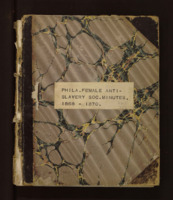 Philadelphia Female Anti-Slavery Society Minutes, 1868-1870
 The Philadelphia Female Anti-Slavery Society (PFASS) was founded in December 1833 and dissolved in March 1870 following the ratification of the 14th and 15th Amendments to the U.S. Constitution. PFASS was founded by eighteen women, including free blacks Margaretta Forten and her sisters Sarah and Harriet. The most well-known white female abolitionist affiliated with the PFASS was Lucretia Mott, and Angelina Grimké, another noted female abolitionist, also joined the organization. The Society was a local chapter affiliated with the American Anti-Slavery Society created the same year but which did not permit women as members. It is worth noting that PFASS was an interracial organization from the start and that free black women took part in its growth and activities, many of them serving in leadership roles. Among other activities, the PFASS advocated for emancipation, boycotted products manufactured by slaves, supported the Underground Railroad, and raised funds for the American Anti-Slavery Society.
-
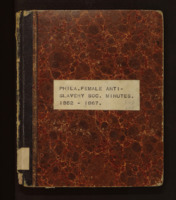 Philadelphia Female Anti-Slavery Society Minutes, 1862-1867
 The Philadelphia Female Anti-Slavery Society (PFASS) was founded in December 1833 and dissolved in March 1870 following the ratification of the 14th and 15th Amendments to the U.S. Constitution. PFASS was founded by eighteen women, including free blacks Margaretta Forten and her sisters Sarah and Harriet. The most well-known white female abolitionist affiliated with the PFASS was Lucretia Mott, and Angelina Grimké, another noted female abolitionist, also joined the organization. The Society was a local chapter affiliated with the American Anti-Slavery Society created the same year but which did not permit women as members. It is worth noting that PFASS was an interracial organization from the start and that free black women took part in its growth and activities, many of them serving in leadership roles. Among other activities, the PFASS advocated for emancipation, boycotted products manufactured by slaves, supported the Underground Railroad, and raised funds for the American Anti-Slavery Society.
-
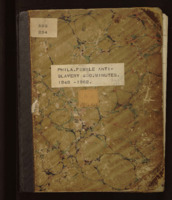 Philadelphia Female Anti-Slavery Society Minutes, 1848-1862
 The Philadelphia Female Anti-Slavery Society (PFASS) was founded in December 1833 and dissolved in March 1870 following the ratification of the 14th and 15th Amendments to the U.S. Constitution. PFASS was founded by eighteen women, including free blacks Margaretta Forten and her sisters Sarah and Harriet. The most well-known white female abolitionist affiliated with the PFASS was Lucretia Mott, and Angelina Grimké, another noted female abolitionist, also joined the organization. The Society was a local chapter affiliated with the American Anti-Slavery Society created the same year but which did not permit women as members. It is worth noting that PFASS was an interracial organization from the start and that free black women took part in its growth and activities, many of them serving in leadership roles. Among other activities, the PFASS advocated for emancipation, boycotted products manufactured by slaves, supported the Underground Railroad, and raised funds for the American Anti-Slavery Society.
-
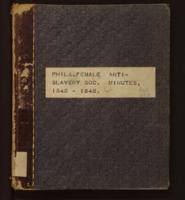 Philadelphia Female Anti-Slavery Society Minutes, 1845-1848
 The Philadelphia Female Anti-Slavery Society (PFASS) was founded in December 1833 and dissolved in March 1870 following the ratification of the 14th and 15th Amendments to the U.S. Constitution. PFASS was founded by eighteen women, including free blacks Margaretta Forten and her sisters Sarah and Harriet. The most well-known white female abolitionist affiliated with the PFASS was Lucretia Mott, and Angelina Grimké, another noted female abolitionist, also joined the organization. The Society was a local chapter affiliated with the American Anti-Slavery Society created the same year but which did not permit women as members. It is worth noting that PFASS was an interracial organization from the start and that free black women took part in its growth and activities, many of them serving in leadership roles. Among other activities, the PFASS advocated for emancipation, boycotted products manufactured by slaves, supported the Underground Railroad, and raised funds for the American Anti-Slavery Society.
-
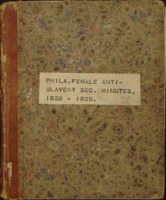 Philadelphia Female Anti-Slavery Society Minutes, 1838-1839
 The Philadelphia Female Anti-Slavery Society (PFASS) was founded in December 1833 and dissolved in March 1870 following the ratification of the 14th and 15th Amendments to the U.S. Constitution. PFASS was founded by eighteen women, including free blacks Margaretta Forten and her sisters Sarah and Harriet. The most well-known white female abolitionist affiliated with the PFASS was Lucretia Mott, and Angelina Grimké, another noted female abolitionist, also joined the organization. The Society was a local chapter affiliated with the American Anti-Slavery Society created the same year but which did not permit women as members. It is worth noting that PFASS was an interracial organization from the start and that free black women took part in its growth and activities, many of them serving in leadership roles. Among other activities, the PFASS advocated for emancipation, boycotted products manufactured by slaves, supported the Underground Railroad, and raised funds for the American Anti-Slavery Society.