-
 Caroline Katzenstein portrait, 1915
 Portraits of Caroline Katzenstein from the Caroline Katzenstein papers [Am .8996]. Katzenstein's first foray into the woman's suffrage movement occurred when she was hired to be secretary of the Pennsylvania branch of the National American Woman's Suffrage Association (NAWSA). After proving her ability to publicize NAWSA's events and goals, she joined the organization's national membership committee and became executive secretary. When the suffrage movement split between those who wanted to obtain suffrage through the states and those who sought to campaign for a federal constitutional amendment, Katzenstein placed her support behind the amendment strategy. She helped found the National Woman's Party which led the suffrage movement to the ratification of the Nineteenth Amendment in 1920.
-
 Caroline Katzenstein portrait, undated
 Portraits of Caroline Katzenstein from the Caroline Katzenstein papers [Am .8996]. Katzenstein's first foray into the woman's suffrage movement occurred when she was hired to be secretary of the Pennsylvania branch of the National American Woman's Suffrage Association (NAWSA). After proving her ability to publicize NAWSA's events and goals, she joined the organization's national membership committee and became executive secretary. When the suffrage movement split between those who wanted to obtain suffrage through the states and those who sought to campaign for a federal constitutional amendment, Katzenstein placed her support behind the amendment strategy. She helped found the National Woman's Party which led the suffrage movement to the ratification of the Nineteenth Amendment in 1920.
-
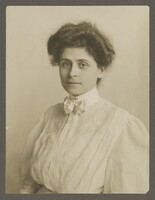 Caroline Katzenstein portrait, 1911
 Portraits of Caroline Katzenstein from the Caroline Katzenstein papers [Am .8996]. Katzenstein's first foray into the woman's suffrage movement occurred when she was hired to be secretary of the Pennsylvania branch of the National American Woman's Suffrage Association (NAWSA). After proving her ability to publicize NAWSA's events and goals, she joined the organization's national membership committee and became executive secretary. When the suffrage movement split between those who wanted to obtain suffrage through the states and those who sought to campaign for a federal constitutional amendment, Katzenstein placed her support behind the federal amendment strategy. She helped found the National Woman's Party which led the suffrage movement to the ratification of the Nineteenth Amendment in 1920.
-
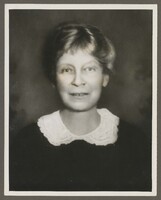 Lavinia Lloyd Dock portrait, undated
 Lavinia Lloyd Dock was a pioneer in nursing education, founding the American Red Cross Nursing Service, and a prominent women's rights activist. She was a member of the National Woman's Party and participated in several demonstrations. This photograph is one of a series amassed by Caroline Katzenstein for her book, 'Lifting the Curtain,' which surveys the development of the woman's suffrage movement in the United States.
-
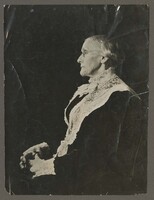 Susan B. Anthony portrait, undated
 Susan B. Anthony, along with Elizabeth Cady Stanton, were the original leaders of the suffrage movement and formed the National American Woman Suffrage Association. This photograph is one of a series amassed by Caroline Katzenstein for her book, 'Lifting the Curtain,' which surveys the development of the woman's suffrage movement in the United States.
-
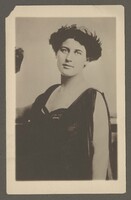 Inez Milholland portrait, undated
 Inez Milholland was a prominent suffragist and is perhaps best known for her part in the 1913 Woman Suffrage Procession. This photograph is one of a series amassed by Caroline Katzenstein for her book, 'Lifting the Curtain,' which surveys the development of the woman's suffrage movement in the United States.
-
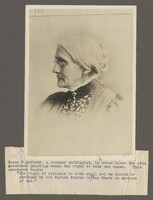 Susan B. Anthony portrait, undated
 Susan B. Anthony, along with Elizabeth Cady Stanton, were the original leaders of the suffrage movement and formed the National American Woman Suffrage Association. This photograph is one of a series amassed by Caroline Katzenstein for her book, 'Lifting the Curtain,' which surveys the development of the woman's suffrage movement in the United States.
-
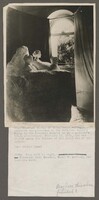 Portrait Monument to Lucretia Mott, Elizabeth Cady Stanton, and Susan B. Anthony photograph, 1921
 The Portrait Monument was created by American sculptor Adelaide Johnson on behalf of the National Woman's Party who presented it to the United States government after the ratification of the Nineteenth Amendment. The monument features busts of three prominent suffragists: Elizabeth Cady Stanton, Susan B. Anthony and Lucretia Mott. This photograph is one of a series amassed by Caroline Katzenstein for her book, 'Lifting the Curtain,' which surveys the development of the woman's suffrage movement in the United States.
-
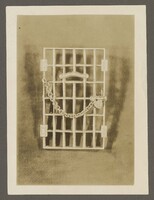 National Woman's Party picket-pin photograph, undated
 Many suffragists were imprisoned while demonstrating in Washington D.C. This pin was produced by the National Woman's Party and worn by formerly imprisoned suffragists as 'badges of honor.' This photograph is one of a series amassed by Caroline Katzenstein for her book, 'Lifting the Curtain,' which surveys the development of the woman's suffrage movement in the United States.
-
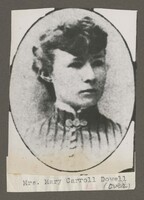 Mary Carroll Dowell portrait, undated
 Mary Carroll Dowell served as a state officer for the Pennsylvania branch of the National Woman's Party and participated in a series of demonstrations with the NWP. This portrait is one of a series amassed by Caroline Katzenstein for her book, 'Lifting the Curtain,' which surveys the development of the woman's suffrage movement in the United States.
-
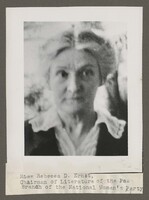 Rebecca D. Ernst portrait, undated
 Rebecca D. Ernst headed the literature department at the Pennsylvania branch of the National Woman's Party. This portrait is one of a series amassed by Caroline Katzenstein for her book, 'Lifting the Curtain,' which surveys the development of the woman's suffrage movement in the United States. Katzenstein mentions in her book that Ernst's model for the literature department was adopted by other branches of the NWP.
-
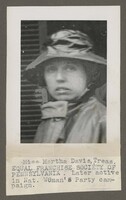 Martha Davis portrait, undated
 Martha Davis served as treasurer of the Equal Franchise Society of Pennsylvania and participated in the National Woman's Party. This portrait is one of a series amassed by Caroline Katzenstein for her book, 'Lifting the Curtain,' which surveys the development of the woman's suffrage movement in the United States.
-
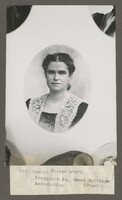 Rachel Foster Avery portrait, undated
 Rachel Foster Avery was a prominent suffragist and served as president of the Pennsylvania Woman Suffrage Association and secretary of the National American Woman Suffrage Association. This portrait is one of a series amassed by Caroline Katzenstein for her book, 'Lifting the Curtain,' which surveys the development of the woman's suffrage movement in the United States.
-
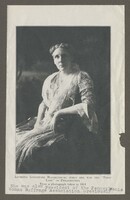 Lucretia L. Blankensburg portrait, undated
 Lucretia Blankensburg, a member of Philadelphia's Quaker elite, participated in a number of the city's women's clubs and served as president of the Pennsylvania Woman Suffrage Association. This portrait is one of a series amassed by Caroline Katzenstein for her book, 'Lifting the Curtain,' which surveys the development of the woman's suffrage movement in the United States.
-
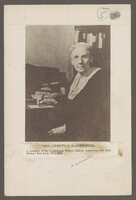 Lucretia L. Blankensburg portrait, undated
 Lucretia Blankensburg, a member of Philadelphia's Quaker elite, participated in a number of the city's women's clubs and served as president of the Pennsylvania Woman Suffrage Association. This portrait is one of a series amassed by Caroline Katzenstein for her book, 'Lifting the Curtain,' which surveys the development of the woman's suffrage movement in the United States.
-
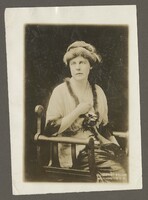 Lucy Burns portrait, undated
 Lucy Burns, along with Alice Paul, helped create the National Woman's Party, which spearheaded the women's suffrage campaign until the ratification of the Nineteenth Amendment in 1920. This portrait is one of a series amassed by Caroline Katzenstein for her book, 'Lifting the Curtain,' which surveys the development of the woman's suffrage movement in the United States.
-
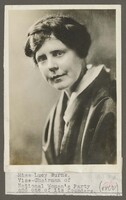 Lucy Burns portrait, undated
 Lucy Burns, along with Alice Paul, helped create the National Woman's Party, which spearheaded the women's suffrage campaign until the ratification of the Nineteenth Amendment in 1920. This portrait is one of a series amassed by Caroline Katzenstein for her book, 'Lifting the Curtain,' which surveys the development of the woman's suffrage movement in the United States.
-
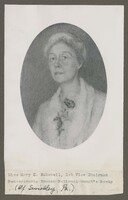 Mary E. Bakewell portrait, undated
 Mary E. Bakewell served as the first vice chairman of the Pennsylvania branch of the National Woman's Party. This portrait is one of a series amassed by Caroline Katzenstein for her book, 'Lifting the Curtain,' which surveys the development of the woman's suffrage movement in the United States.
-
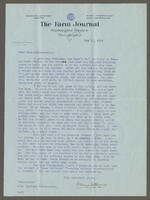 Wilmer Atkinson letter to Caroline Katzenstein, 11 May 1914
 A letter from Wilmer Atkinson, editor at the Farm Journal, to Caroline Katzenstein relating to a 1914 suffrage demonstration in Philadelphia.
-
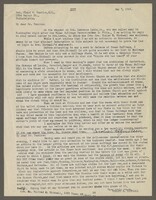 Caroline Katzenstein letter to Floyd W. Tomkins, 7 May 1914
 In this letter Caroline Katzenstein transmits a series of arguments in support of woman's suffrage to Reverend Floyd W. Tomkins, an Episcopal American deacon and rector of the Church of the Holy Trinity in Philadelphia. Based on an adjoining letter from Violet Birdsall, Tomkins seemed to be wary that woman's suffrage would tilt the balance of power among American churches in favor of the Mormon Church.
-
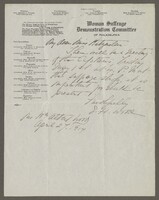 Eleanor Harvey Wood letter to Caroline Katzenstein, 27 April 1914
 Eleanor Harvey Wood, a chairman of the Woman Suffrage Demonstration Committee, sent this letter to Caroline Katzenstein inviting her to a Committee meeting.
-
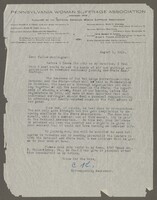 Caroline Katzenstein letter to members of the Pennsylvania Woman Suffrage Association, 1 August 1912
 A letter that Caroline Katzenstein sent to Pennsylvania suffrage organizations urging them to join the Pennsylvania Woman Suffrage Association and, by extension, the National Woman Suffrage Association. She argues that a show of unity at the 1912 state and national suffrage conventions in Philadelphia would further promote their cause at a 1913 hearing before Congress.
-
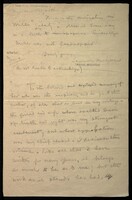 John Stewart Mill dedication from On Liberty
 A handwritten copy of the dedication in John Stewart Mill's book 'On Liberty.' The copy was prepared for Caroline Katzenstein for potential use in new paper advertising for women's suffrage groups. Mill was an outspoken supporter of women's suffrage.
-
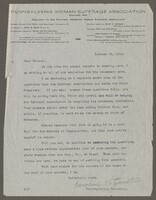 Caroline Katzenstein survey to members of the Pennsylvania Woman Suffrage Association, 15 October 1912
 A letter put out by Caroline Katzenstein, then the corresponding secretary of the Pennsylvania Woman Suffrage Association, requesting that Association members supply answers to a questionnaire (now missing). The data from the survey was used in the National Woman Suffrage Association's 1912 annual report.
-
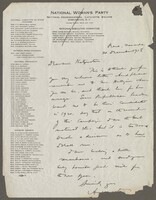 Anne Martin letter to Caroline Katzenstein, 20 December 1918
 In this letter Anne Martin discusses the possibility of running for United States senate in 1920, at the urging of some leaders of the Republican Party. Martin was the first national chairman of the National Woman's Party, and ran for senate in 1918 and again in 1920.