-
 Magdalen Society of Philadelphia matron's diary, 1906-1908
 The matron's diary was maintained throughout the late nineteenth and early twentieth century while the Society was under the auspices of Elizabeth Freeberger. The manuscripts reveal the day to day happenings of the Society, including admission and dismissal information and stories about the women who lived in the house. They also detail the matrons' education strategies and approaches to reforming the inmates through work and prayer. Pages 147 to 200 of this volume are blank.
-
 Magdalen Society of Philadelphia matron's diary, 1898-1906
 The matron's diary was maintained throughout the late nineteenth and early twentieth century while the Society was under the auspices of Elizabeth Freeberger. The manuscripts reveal the day to day happenings of the Society, including admission and dismissal information and stories about the women who lived in the house. They also detail the matrons' education strategies and approaches to reforming the inmates through work and prayer.
-
 Magdalen Society of Philadelphia matron's diary, 1891-1898
 The matron's diary was maintained throughout the late nineteenth and early twentieth century while the Society was under the auspices of Elizabeth Freeberger. The manuscripts reveal the day to day happenings of the Society, including admission and dismissal information and stories about the women who lived in the house. They also detail the matrons' education strategies and approaches to reforming the inmates through work and prayer.
-
Magdalen Society of Philadelphia matron's diary, 1885-1891
The matron's diary was maintained throughout the late nineteenth and early twentieth century while the Society was under the auspices of Elizabeth Freeberger. The manuscripts reveal the day to day happenings of the Society, including admission and dismissal information and stories about the women who lived in the house. They also detail the matrons' education strategies and approaches to reforming the inmates through work and prayer.
-
Magdalen Society of Philadelphia matron's diary, 1881-1885
The matron's diary was maintained throughout the late nineteenth and early twentieth century while the Society was under the auspices of Elizabeth Freeberger. The manuscripts reveal the day to day happenings of the Society, including admission and dismissal information and stories about the women who lived in the house. They also detail the matrons' education strategies and approaches to reforming the inmates through work and prayer.
-
Magdalen Society of Philadelphia matron's diary, 1878-1881
The matron's diary was maintained throughout the late nineteenth and early twentieth century while the Society was under the auspices of Elizabeth Freeberger. The manuscripts reveal the day to day happenings of the Society, including admission and dismissal information and stories about the women who lived in the house. They also detail the matrons' education strategies and approaches to reforming the inmates through work and prayer.
-
Magdalen Society of Philadelphia matron's diary, 1829-1835
The matron's diary was maintained throughout the late nineteenth and early twentieth century while the Society was under the auspices of Elizabeth Freeberger. The manuscripts reveal the day to day happenings of the Society, including admission and dismissal information and stories about the women who lived in the house. They also detail the matrons' education strategies and approaches to reforming the inmates through work and prayer.
-
Magdalen Society of Philadelphia register, 1878-1910
The admission and discharge records trace the flow of inmates of the Magdalen Society. They also disclose detailed information about the lives of inmates and serve as a window to nineteenth century attitudes towards family and women. The manuscripts were fastidiously kept from 1836 until the Society’s transition to the White-Williams Foundation in 1917, and provide inmate names and dates of occupancy. Brief descriptions of discharge are often given. Many women were sent back to their families or simply left at their own volition, while others are noted to have “escaped” or were ejected for “improper conduct.” Women who died in the house are regularly indicated to have been interred in the yard of the property. Some accounts offer more substantive background information. The first entry of the Society’s register, for instance, recounts the admission of a young girl who was spurned by her family for being “seduced…by her father’s coachman.” Indeed, family member death or neglect are some of the most common remarks provided. The admission and discharge records are a boon to researchers interested in post-revolutionary philanthropic organizations and the history of women and society in general in the nineteenth and early twentieth centuries. Pages 365 to 492 of this volume are blank.
-
Magdalen Society of Philadelphia records of admissions and discharges, 1908-1917
The admission and discharge records trace the flow of inmates of the Magdalen Society. They also disclose detailed information about the lives of inmates and serve as a window to nineteenth century attitudes towards women and family life. The manuscripts were fastidiously kept from 1836 until the Society’s transition to the White-Williams Foundation in 1917, and provide residents' names and dates of occupancy. Brief descriptions of discharge are often given. Many women were sent back to their families or simply left at their own volition, while others are noted to have “escaped” or were ejected for “improper conduct.” Women who died in the house are regularly indicated to have been interred in the yard of the property. Some accounts offer more substantive background information. The first entry of the Society’s register, for instance, recounts the admission of a young girl who was spurned by her family for being “seduced…by her father’s coachman.” Indeed, family member death or neglect are some of the most common remarks provided. The admission and discharge records are a boon to researchers interested in post-revolutionary philanthropic organizations and the history of women and society in general in the nineteenth and early twentieth centuries. Pages 104 to 301 of this volume are blank.
-
Magdalen Society of Philadelphia records of admissions and discharges, 1878-1908
The admission and discharge records trace the flow of inmates of the Magdalen Society. They also disclose detailed information about the lives of inmates and serve as a window to nineteenth century attitudes towards women and family life. The manuscripts were fastidiously kept from 1836 until the Society’s transition to the White-Williams Foundation in 1917, and provide residents' names and dates of occupancy. Brief descriptions of discharge are often given. Many women were sent back to their families or simply left at their own volition, while others are noted to have “escaped” or were ejected for “improper conduct.” Women who died in the house are regularly indicated to have been interred in the yard of the property. Some accounts offer more substantive background information. The first entry of the Society’s register, for instance, recounts the admission of a young girl who was spurned by her family for being “seduced…by her father’s coachman.” Indeed, family member death or neglect are some of the most common remarks provided. The admission and discharge records are a boon to researchers interested in post-revolutionary philanthropic organizations and the history of women and society in general in the nineteenth and early twentieth centuries. Pages 134 to 144 of this volume are blank.
-
Magdalen Society of Philadelphia records of admissions and discharges, 1836-1886
The admission and discharge records trace the flow of inmates of the Magdalen Society. They also disclose detailed information about the lives of inmates and serve as a window to nineteenth century attitudes towards women and family life. The manuscripts were fastidiously kept from 1836 until the Society’s transition to the White-Williams Foundation in 1917, and provide residents' names and dates of occupancy. Brief descriptions of discharge are often given. Many women were sent back to their families or simply left at their own volition, while others are noted to have “escaped” or were ejected for “improper conduct.” Women who died in the house are regularly indicated to have been interred in the yard of the property. Some accounts offer more substantive background information. The first entry of the Society’s register, for instance, recounts the admission of a young girl who was spurned by her family for being “seduced…by her father’s coachman.” Indeed, family member death or neglect are some of the most common remarks provided. The admission and discharge records are a boon to researchers interested in post-revolutionary philanthropic organizations and the history of women and society in general in the nineteenth and early twentieth centuries.
-
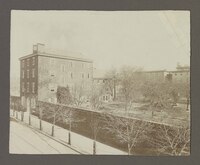 Magdalen Society of Philadelphia photographs, approximately 1875, 1974
 Photographs of the Magdalen Society's property taken in two periods: the late 19th century and in 1974.
-
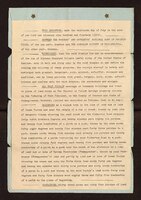 Magdalen Society of Philadelphia property deed, 1914
 A certified copy of the deed to the property of 21st and Race St.
-
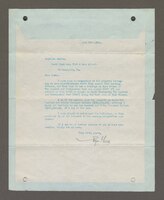 Magdalen Society of Philadelphia property value report, 1914
 This report measures the physical dimensions of the Magdalen Society's property at 21st and Race St. and approximates its value at $130,000.
-
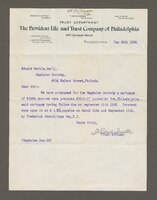 Magdalen Society of Philadelphia mortgage documents, 1898
 A notice from The Provident Life and Trust Company of Philadelphia informing the secretary of the Magdalen Society, Edward Bettle, of the purchase for the Society a mortgage of $3500.
-
 Magdalen Society of Philadelphia property deed, 1833
 A deed for property on 21st and Race St.
-
 Magdalen Society of Philadelphia property deed, 1807
 A deed for property on 21st and Race St.
-
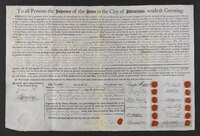 Magdalen Society of Philadelphia property deed, 1808
 A deed for property on 21st and Race St.
-
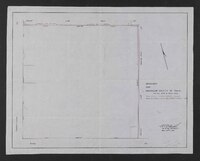 Magdalen Society of Philadelphia property survey, 1910
 This survey measures the basic countours of the Magdalen Society's property on 21st and Race St.
-
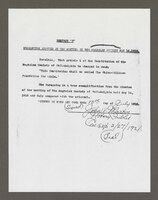 Magdalen Society of Philadelphia future plans, 1917-1918
 These documents highlight the suggested objectives and methods for transforming the Magdalen Society into the White-Williams Foundation.
-
Magdalen Society of Philadelphia histories, 1956
Negley K. Teeters, a Sociologist of Temple University, wrote "The Early Days of the Magdalen Society of Philadelphia" in 1956 for The Social Service Review. The article provides an overview of the Society's development from its inception to the mid nineteenth century. This item also included a brief history of the Society written around 1850.
-
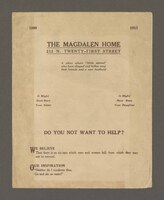 Magdalen Society of Philadelphia publicity, 1913
 This fundraising brochure briefly highlights the Society's motivations, objectives, and administrative composition. "Do you not want to help?"
-
Magdalen Society of Philadelphia lists of dismissals, monies spent, and letters received, 1884-1906
This series of documents includes lists of inmates dismissed from 1884-1900; tallies of letters received in regard to specific inmates; and monies received from specified donors.
-
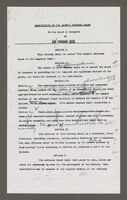 Magdalen Society of Philadelphia constitution of the Women's Advisory Board, undated
 The women's advisory board of the Magdalen Society of Philadelphia had the stated aim of supporting the all-male board of managers and "providing for the temporal and spiritual welfare of the girls."
-
Magdalen Society of Philadelphia board of managers' bylaws, undated
This mélange of administrative documents includes the constitution of the Magdalen Society and the bylaws of its board of managers.